
One Life Lived in Trek

My absolute first memory is standing in front of my grandparent's television and pointing at a grainy grey image. Beside me, my mother says, "Louis, that's a man on the moon." So maybe it's understandable the part that science fiction, and Star Trek in particular, has played in my life.
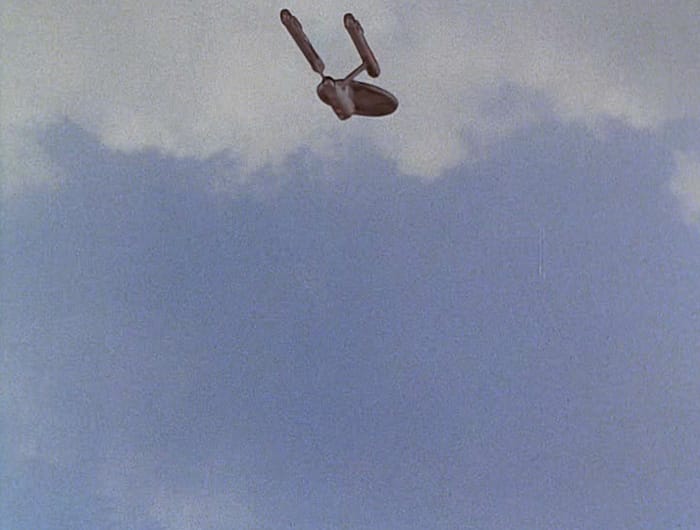
My first memory of Trek is a few years later. I'm six or seven, somewhere in there, lying on the rug in front of the television at my grandparent's house. My uncle, himself just a teenager, is lying next to me. He is watching Star Trek, and so, I am too. The episode, I will learn years later, is "Tomorrow is Yesterday," in which the Enterprise is accidentally hurled back in time and beams a US Air Force pilot aboard their ship.
The sight of the Enterprise in Earth's sky, though clunky special effects to today's eyes, was the most real thing I had ever seen. I knew it was television, but I could not begin to understand how they had gotten that ship up in that cloud. I mean, it was there. I have been hooked ever since.
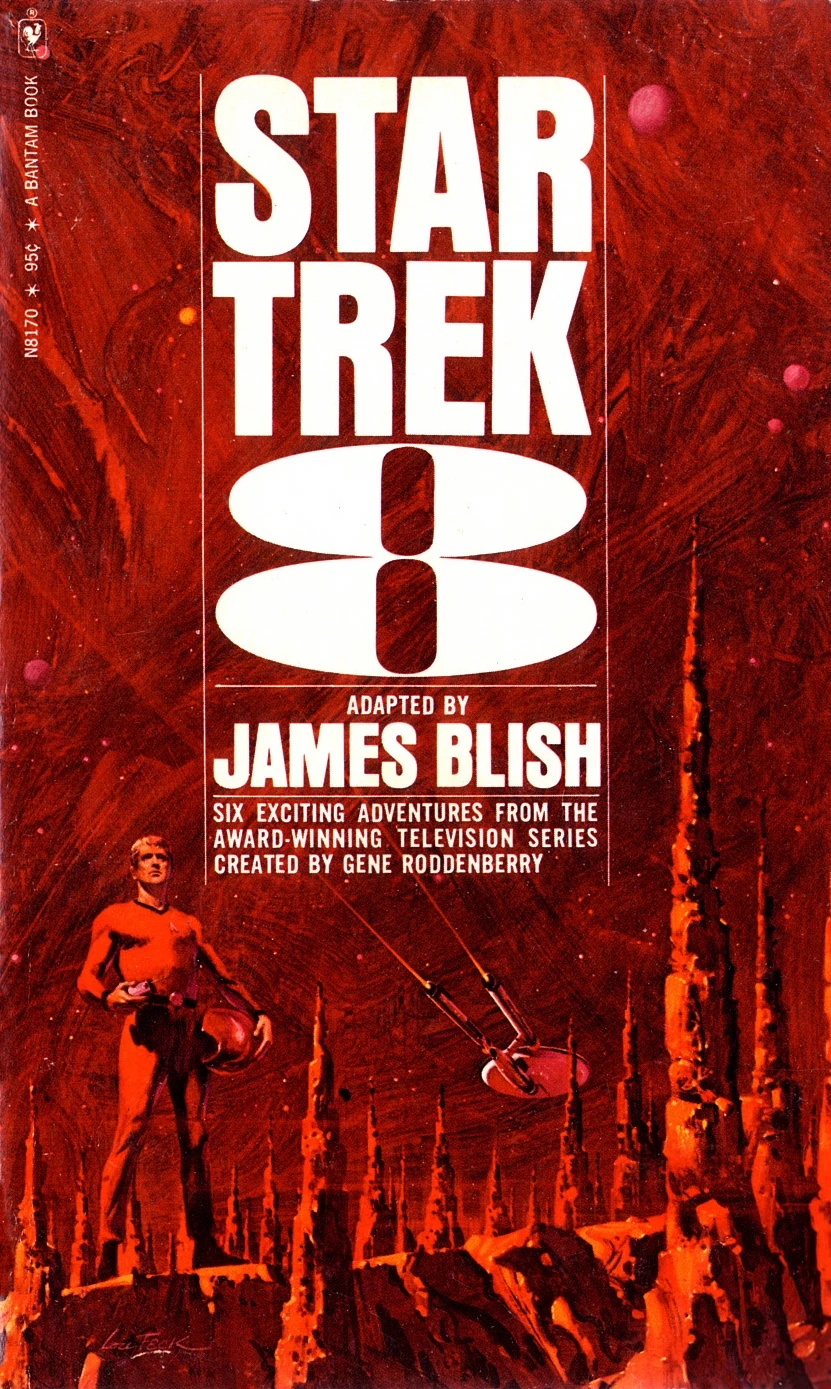
Now, the Alabama of the 1970s was, well, a much deeper Deep South than it even is now. In a very real way, I credit Star Trek's message of diversity and equality as being the major influence on me, the chief reason that growing up in an all-white and very racist environment I was able to overcome my surroundings and evolve as a person. It didn't happen overnight, but it was a journey that took me out of the state and then out of the country (and out of my religion too). Science fiction in general played a part, but again, it was Star Trek that lead me to the genre. My very conservative, Fundamentalist church-school had a library, and in the bottom corner shelf, totally forgotten, I found copies of James Blish's novelizations of the original series. I read those battered paperbacks over and over, to the point where the librarian would ask me "Don't you want to read anything else?" Because Blish opened the door, I did, reading the other SF works they had on the shelf. I later found the Science Fiction Hall of Fame anthologies in my grandparent's basement (probably also belonging to my uncle), and that was my doorway to the future.
In the early 90s, I was back in Alabama, after two years working in theater in Chicago. Star Trek: The Next Generation was running, as was Deep Space Nine. Paramount had an unusual policy of accepting spec scripts, teleplays that you could write "on spec" and send in without an invite or an agent. I wrote four, and sent the first three in one at a time. (The fourth, I kid you not, was halfway done and still in my computer when I turned on Deep Space Nine and saw it, damn near scene for scene. This was before computers were connected to anything, and I'd never printed it out or spoken about it, so don't ever tell me writers aren't plugged into the collective unconscious of ideas.)
My father, who never really understood me but nonetheless supported me in unbelievable ways, found out about a "Writing for Star Trek" weekend course that Jack B. Sowards (The Wrath of Khan) was teaching at UC Irvine. He signed me up for it before he even told me about it.
That weekend in Irvine, I called up an ex-girlfriend who had moved to LA and landed a job as Mike Ovitz's assistant at the talent agency CAA. I asked her if she wanted to have dinner. But when I got to her house, she informed me that her boss had invited us to join the panelists at the "Digital Hollywood Convention" for dinner at Mezzaluna's. I was seated next to Herbie Hancock and Dr. Fiorella Terenzi, but at the other end of the table, there was Brannon Braga (writer/producer on The Next Generation at the time.) Towards the end of the meal, I approached Brannon to express the coincidence of coming for a Trek course only to be at dinner with a Trek writer. "Wait a minute!" he said. "You came all the way from Alabama just to take the course?" I said that I did, and he replied, "Could you come back next month?" He then said he would put me on the guest list for the course he and Ronald D. Moore taught at the Pasadena Star Trek convention.
So back to LA I came. But not before I returned to waiting tables at the Mexican chain where I had been working, and looking up and seeing a White Van being chased by police and images of Mezzaluna's all over the news. As tragic as that was, and I don't mean to downplay it, having gone to LA for the first time and meeting musical celebrities and tv writers and now seeing the OJ trial talking about the very place I had just dined, Los Angeles looked like some magical place where one only had to walk outside to step right into the middle of everything.
I had moved there before the end of the year.
I worked as a production assistant for a while before that dried up, but through an unusual set of circumstances, I found myself working as a journalist for Sci Fi Universe, one of or maybe the only non-porn magazine owned by Larry Flint. That lead me to a position at Titan Magazines, who were launching Star Trek Monthly and needed an "LA Liaison" to be their point of contact with Paramount Studios.
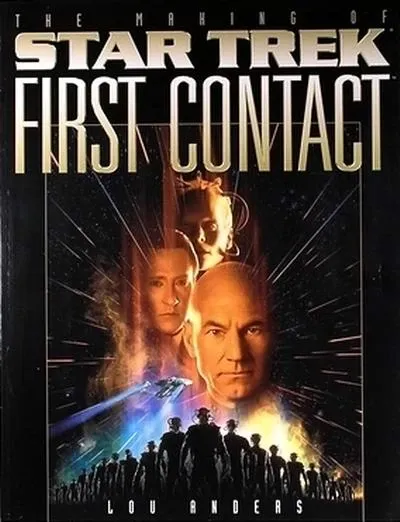
I spent the second half of the 90s making regular visits to the sets and offices of Star Trek. I have walked through the Voyager, stood on the transporter, lain on the upper level of the Promenade to spy on René Auberjonois as he performed a soliloquy in Odo's security office, and stretched out on Ira Steven Behr's couch. I wrote some five hundred articles, most of them interviews, and even ran the short-lived, but dear-to-my-heart Deep Space Nine Poster Magazine. (The four page magazine would examine one episode per issue and fold out to a poster you could hang on your wall.) I even wrote the book The Making of Star Trek First Contact.
I left Los Angeles in 2000. Another ex-girlfriend was launching an internet startup in what would one day be the ebook space, and she hired me away to San Francisco to select and acquire the content it would need. Obviously, we felt a forward-looking technology would be of interest to science fiction authors, which is why, after the dot-com crash, I ended up as an editor of a science fiction and fantasy book line. And you know from there.
Sadly, I don't have a personal connection to Star Trek this century. I don't miss journalism, and I don't often miss LA, but I have fallen in love with all of the new Star Trek series. I wish I could have walked on the Discover sets or talked with any of the wonderful actors who have worked to bring Star Trek into the 21st century. I've love the opportunity to tell Kerrice Brooks how amazing she is. Or converse with Robert Picardo again. Or just be in Tig Notaro's presence.
It's ironic that as Star Trek celebrates its 60th year (and my own 60th approaches), the franchise's future is very uncertain. The world needs to believe that we can be better than we are. Star Trek's message of diversity, equality, and inclusion is central to its core, and without that message, it isn't Star Trek. And now Star Trek is in the hands of people who very much don't believe in its message.
In a very real way, Gene Roddenberry's vision changed my life, saved my soul. I wouldn't be who I was nor would I have lived the life I have lived without Star Trek. I hope Star Trek can continue to change lives going forward. But as Robert Picardo himself said in reference to Starfleet Academy's cancellation, "There seems to be a movement to drive us back to the 1950s. Star Trek is all about the future, not about returning."
My sincerest wish is that Star Trek continues to inspire. But to do so, the show needs to be about what it has always been about, the future. A Star Trek that takes us backwards isn't Star Trek at all. If this is it, or if what follows turns away from Star Trek's core ethos, that will be a great loss, a great crime. But I'll be forever grateful to six decades of traveling the galaxy with the greatest stories and the greatest crews. These stories changed my life and made my life.
To Star Trek and to us all I say...
Live Long and Prosper.