
Star Trek: A Voyager Comes Home

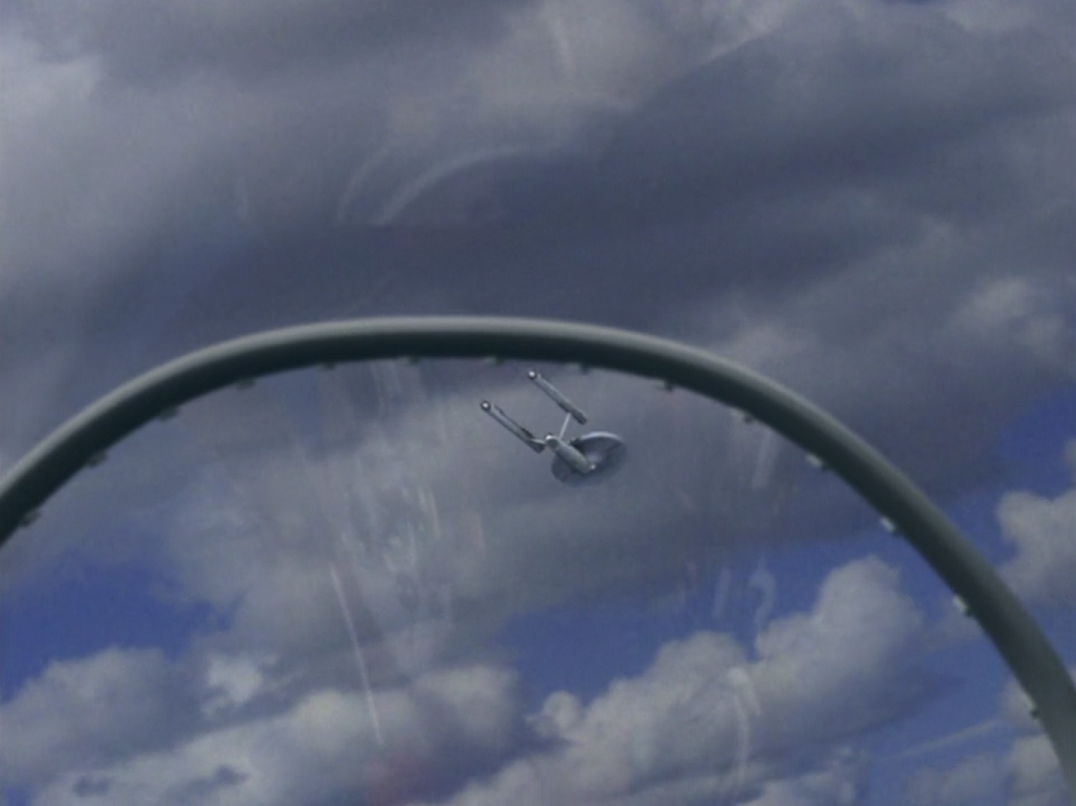
I was maybe seven or eight. At my grandparent's house. It was the 1970s. My uncle was still a teenager. He was watching an episode of Star Trek. The USS Enterprise had been knocked back in time to 1960s Earth. A plane is dispatched to intercept, and they end up beaming a US fighter pilot aboard.
I know now the episode was "Tomorrow Is Yesterday" (Season 1, Episode 19). At the time, I didn't know what I was watching. But I thought the starship in Earth's blue sky was the most realistic thing I'd ever seen. On some level, I must have known it was a model, but it all seemed so real to me. Did they film this show in space? I've been a fan ever since.
Fast forward to the summer 1994. I'm back home in Alabama after college, London, Chicago, but Paramount has a policy of accepting unsolicited spec scripts. This is something just about no other television show does. I've been writing Deep Space 9 scripts and sending them to the production offices. My father, always supportive, signs me up for a weekend course at UC Irvine on "Writing for Star Trek." It's taught by Jack Sowards, writer/producer of Wrath of Khan (and creator of the term Kobayashi Maru). Executive Producer Michael Piller gives a talk.
I look up an ex-girlfriend who moved from Alabama to Los Angeles and ended up working for CAA (Creative Artists Agency). We're going to grab a bite, but by the time I reach her, she's been invited by her boss (Michael Ovitz!) to attend a dinner at Mesa Luna with the panelists of the "Digital Hollywood" conference. I'm in torn jeans and an old t-shirt, but I'm seating between Herbie Hancock and Dr. Fiorella Terenzi. At the other end of the table is Star Trek writer/producer Brannon Braga. I approach him towards the end of the evening, just to remark on the coincidence of coming out for a Star Trek seminar and ending up at the same table. He's impressed I've come all the way from Alabama and asks if I can come back next month. He offers to comp me into his own seminar, being taught at a Star Trek convention in Pasadena.
I go home to Alabama astounded at how easy it is to meet people in Hollywood. I turn on the TV and see a white van on the 405 being chased by a line of police cars. There's a picture on the tv of a guy that I'm pretty sure was one of our waiters. This is horrible, but still reinforces in my 20-something brain how there is a center of the universe and Alabama is nowhere near it.
I will quit my job a few weeks later and move to California.
I work as a PA (production assistant) on rap and pop music videos and infomercials. This dries up before the year is out. In desperation, I think I'll try to be a journalist. Either rock or sci-fi. I flip a coin. Sci-fi wins.
I buy every sci-fi magazine on the stands, never having read any of them, and write them all, trying to pitch an interview with the scribes of Virgin Books' New Adventures (of Doctor Who) line. No one cares, but Sci Fi Universe, owned by Hustler's Larry Flint, replies that they've been invited to a Doctor Who convention in Irvine (Irvine again!). No one in the office wants to go. Maybe I can.
The convention is all afire with the then-in-production 1996 Fox/BBC Doctor Who tv movie staring Paul McGann. I meet the "fan liaison" who I apparently impress because a week later he recommends me to Titan Magazines in the UK, who are looking to start a magazine, Star Trek Monthly, to cover all things Trek and need a liaison in Los Angeles. That ends up being me.
From 1996-99, I write over 500 articles about Star Trek and later Babylon 5. I'm on sets, in offices, in workshops and trailers. I live with a micro cassette recorder and a few blank tapes at all times. I eat lunch with Professor Moriarity and Tuvix and I have a Klingon General's personal email. When publicity would call the offices asking if I can drop by, Lolita Fatjo, preproduction coordinator and script coordinator, always says "Lou Bald Lou? Send him over!"
This is a highlight:
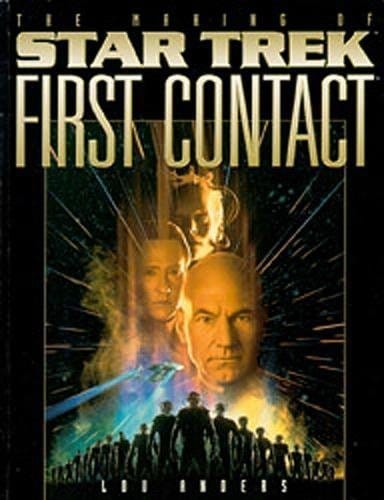
Eventually, DS9 ends its run, Babylon 5 does too, and most new Hollywood genre shows are moving production to Australia. There's less and less work for me to do. Titan, trying to find things to justify my retainer, send me to spend two days with Wes Craven at his home in the Hollywood Hills. But aside from that and photo sourcing for a Xena magazine, there's not much work to be had.
I'm not a fan of Voyager. It seems juvenile and patronizing compared to TNG and DS9. I feel dishonest writing 100% positive articles for a licensed title. When an ex-girlfriend offers me a job at an internet startup in the ebook space in San Francisco, I quit journalism, quit LA, and quit television for a while.
I don't watch the final three seasons of Voyager.
The dot com crash.
I'm back in Alabama. Star Trek: Enterprise debuts in 2001. The theme song is atrocious. I never watch it again after the pilot. I don't watch any Star Trek.
It's 2002. Star Trek: Nemesis is coming out. I have met my wife. I show her maybe 20 select Trek episodes from across Trek's history to prepare her. Nemesis is so bad she's upset she did all the prep for it. So am I. We're done with Trek for a time.
It's 2009. JJ Abrams' reboot comes out. It's okay, but it doesn't pull me back.
It's not until Star Trek: Discovery in 2017 that I consider myself a fan again. I love all the new Trek, even and especially Lower Decks, which sounded to me like the worst betrayal of the franchise in its history and ends up being the show I can't live without.
I'm fully back. I decide it's time to fill in the history. I start watching Voyager again.
I don't hate it. I love the Doctor. I appreciate Seven of Nine in a way I never have before. I love how Janeway is the first Captain with a science background we've seen. It's not perfect—I cringe every single time Paris talks to Kim, and everyone is so patronizing to each other—but I appreciate it now in a way I didn't then. There are episodes I love.
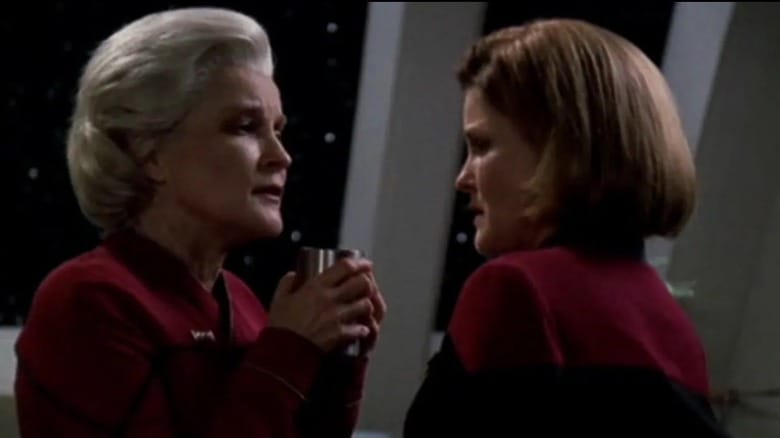
And then last night, 24 years, 8 months and 10 days after it originally debuted, I watch "Endgame", and I learn how the Voyager finally came home.
For a time, I was a small part of Star Trek. But Star Trek has always been a big part of me. I don't miss journalism, though I am sorry I never got to sit down with any of the new actors or walk through any of the new sets. Star Trek is now a jumble of emotions for me—nostalgia for a specific time in my life and sadness for how far our modern world is from their optimistic future vision (and how far I am from believing we could achieve it). But I'm a die-hard fan again, excited for each new episode. Excited to believe that they really film in space.
Like Voyager, I feel like I've finally made it home.