
You Can't Make This Stuff Up: Using Real World History and Legend as Inspiration for World Design

Once upon a time, a great city fell to an invading empire. Its ruler refused to surrender. He stayed to fight to the death alongside his soldiers. As the enemy forces washed over them, angelic beings appeared in the sky. They lifted the ruler out of the battlefield. But then the angels transformed him into a marble statue. The angels hid the statue in a secret cave near the city's magnificent golden gate. One day, the prophecy states, the statue will come to life, and the invaders will be repelled.
So, that hasn't happened yet. Constantine XI hasn't returned, and Istanbul is thriving five hundred and seventy-three years later. But in my novel Nightborn, a dwarven soldier in an ancient empire was transformed into a marble statue, along with someone else, and they did return when the city of Gordasha was under threat.
I won't spoil how things went down in the book, but it was very different from the events, real or mythical, of the conquest of Constantinople.
The Welsh legend of Gelert the hound and Prince Llywelyn the Great is heartbreaking. I'm not going to recount it now as I'd risk tearing up. But in the adventure Vengeance of the Valravn, it gets recast in a Scandinavian context as a jarl, his beloved wolf, and an evil valravn—a wolf-raven hybrid from 1800s Scandinavian folklore. The legend informs the backstory of the adventure, as the spirit of the evil creature has lingered across the centuries and is finally exacting its revenge, but the spirit of the wolf calls heroes to stop it.
I've drawn heavily on my literary and cinematic influences in my writing, as well as my own life experiences—Frostborn has a section where the protagonists are floating down a rushing river that is based on my own experiences rafting in Tennessee under flood conditions, and there's a sequence where one of the leads skies far too fast through a woods that is likewise straight from my life—but for really unbelievable stories, history and the myths layered atop important historical events are a great wellspring of ideas.
Do you know there's a massive, talking giant's head buried beneath the Tower of London that serves as a magical talisman that wards off invaders? Or that the ghost of Jean the Skinner, a butcher murdered on the orders of Queen Catherine de' Medici for knowing too many royal secrets, now haunts a castle as a one-eyed, red-clothed gnome?
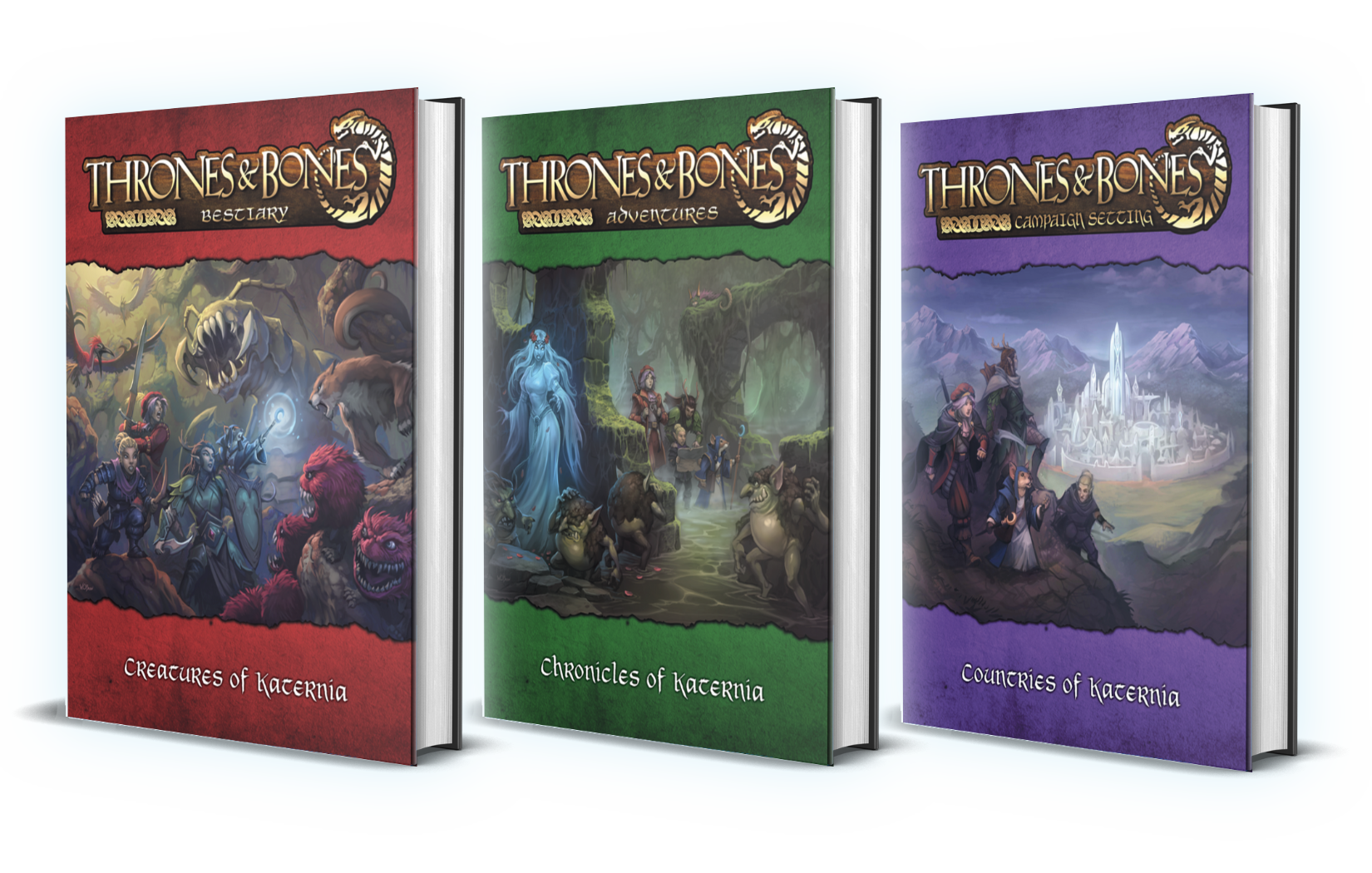
One of these facts inspired a bit of lore in Countries of Katernia and the other a monster that appears in Creatures of Katernia and pops up in an adventure in Chronicles of Katernia, the three books coming to Kickstarter next year. They aren't really recognizable from their source material, because the history is the springboard, not the goal. But whether you are plotting a novel or drafting a roleplaying game adventure, don't just fall back on the easy cliches and fantasy tropes that we all know. Think of a time and place that is reminiscent of what you are writing. Make the effort to do a little digging into the real history of that place and the folklore and legends that grew up around that history, and your imagination will be sent running. Because when it comes to the things that happened in our real world—and the things people believe actually happened—you can't make this stuff up. But you can make up stuff based on it, and it will sing.
If you'd rather watch and listen than read...